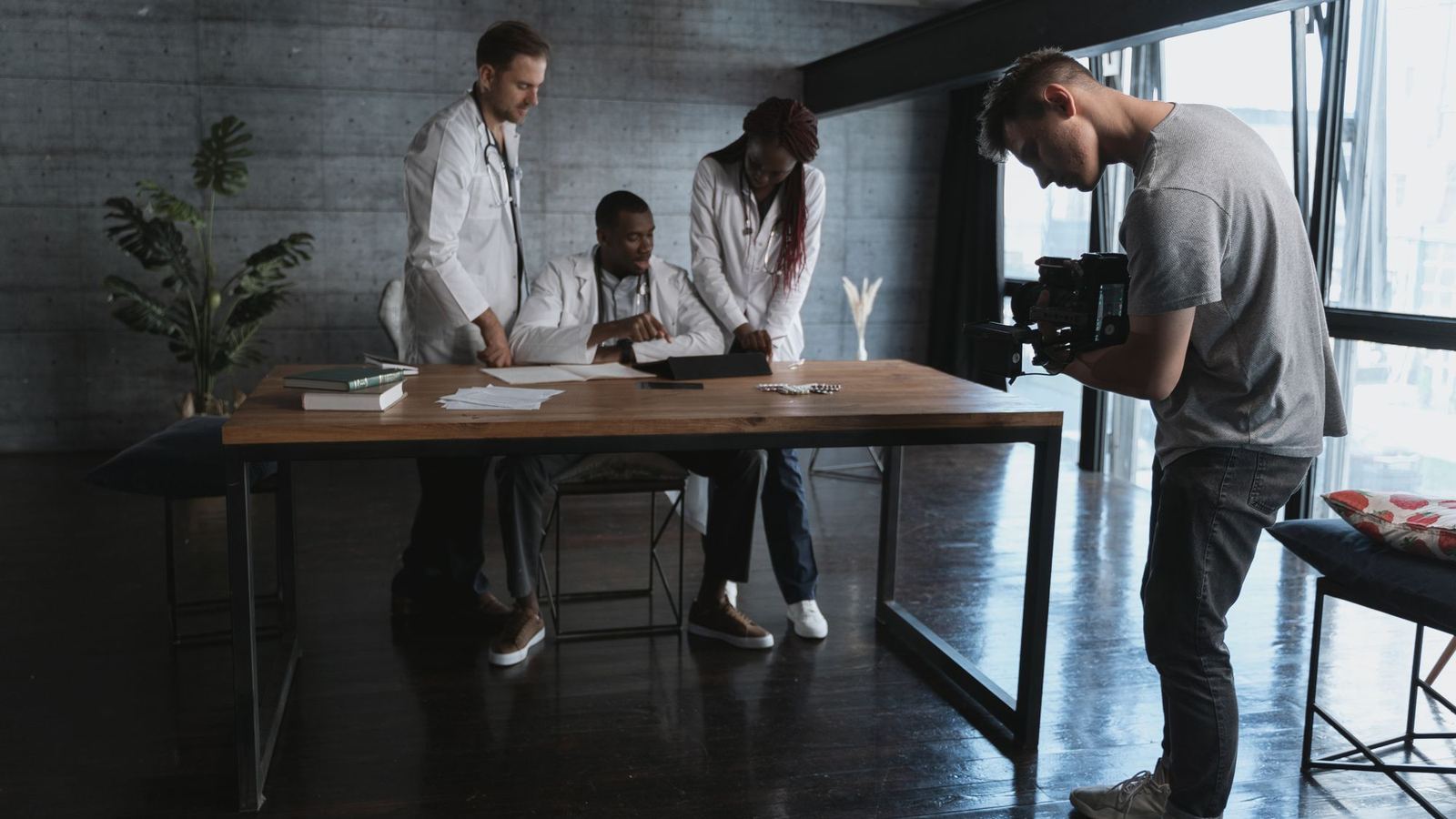
A hospital or clinic is not a film set. Patients are arriving, staff are working, and a camera crew is one more thing moving through a building that runs on a tight schedule. That is the first thing a medical videographer has to understand, and it shapes every other decision on the shoot.
Healthcare organizations use video for practical reasons. A practice needs physicians introduced properly on its website. A hospital needs recruiting material that reaches nurses who have ten other offers. A service line needs a clear explanation that a patient can watch at home before a procedure. The work looks simple from the outside. It is not, because the setting sets rules that a general camera operator may never have worked under. This guide covers what a medical videographer actually does, from the first planning call to the final files, and the questions worth asking before you hire one. For the full service overview, see our healthcare and medical Video Production page.
The Job Starts With Privacy, Not Cameras
Before anyone talks about lenses, a medical videographer plans around privacy. Which areas of the building can be filmed, and which cannot. Who has agreed to appear on camera, in writing. Where a camera can sit in a waiting room without recording patients who never agreed to anything. What your organization requires before a staff member or patient is identifiable in a finished video.
That planning belongs at the start, not on the morning of the shoot. A good crew works to your facility’s rules, follows your escort and access requirements, and builds the shot list only from approved spaces and approved people. If a videographer does not raise privacy in the first conversation, that tells you something about how the shoot day will go.
What a Medical Videographer Actually Films
Most healthcare video work falls into a few clear categories:
- Physician and staff introductions. Short interviews that let patients meet a doctor before the first appointment. These carry a large share of the trust decision on a practice website.
- Facility tours. A guided walk through a new clinic, a renovated wing, or an expanded service line. The planning logic is similar to any facility video tour, with one difference: the building is occupied by patients, and the tour has to respect that at every turn.
- Patient stories. A patient describing their care in their own words. Done well, patient story and testimonial video is the most credible material a healthcare organization can publish. Done carelessly, it makes everyone in the room uncomfortable, including the patient.
- Service line explainers. A surgeon, therapist, or specialist explaining a procedure or treatment in plain language, so a patient arrives informed instead of anxious.
- Recruiting video. Nurses, techs, and support staff are hard to hire. Video that shows the real team and the real workplace gives a healthcare recruiting effort something a job posting cannot.
- Training and onboarding. Repeatable instruction for new staff, covered in more depth on our training and educational Video Production page.
Working in a Building That Cannot Stop for You
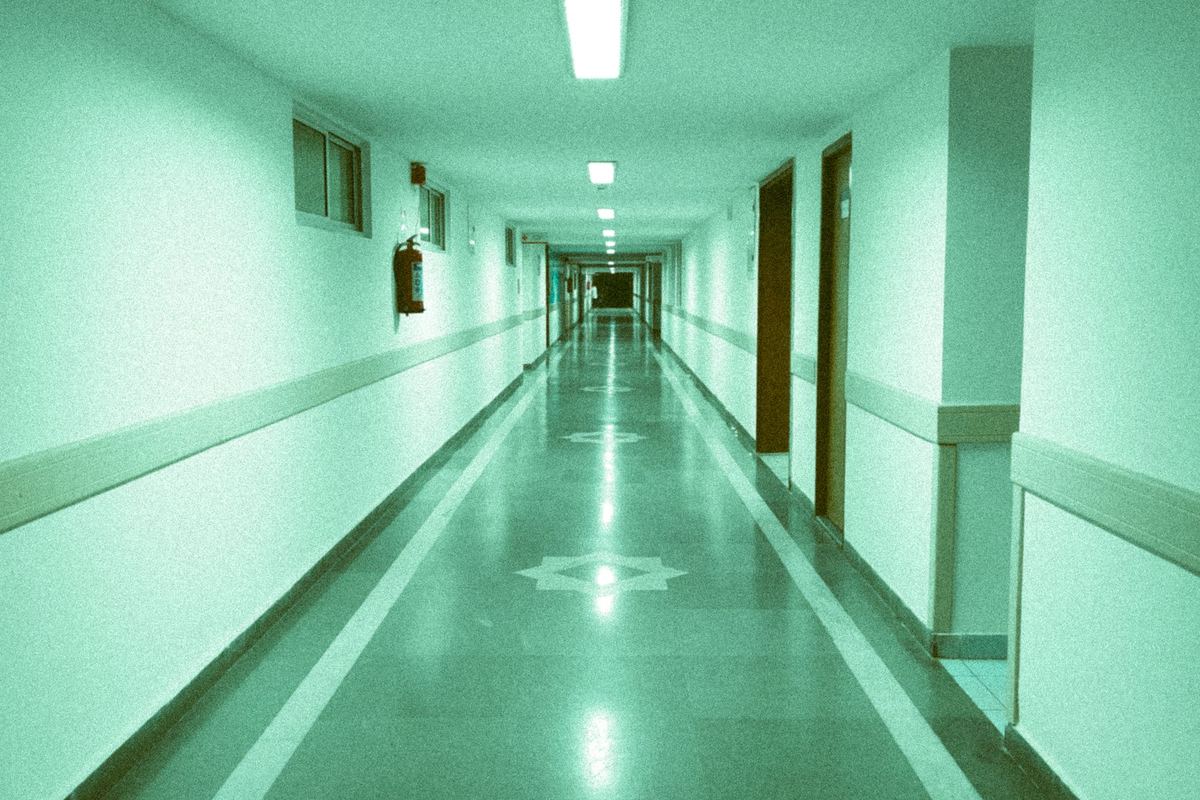
A medical videographer works around care, never in front of it. Interviews get scheduled in gaps, not during clinic hours in active rooms. Equipment stays compact, because a full lighting rig in a hallway is a problem for everyone walking past it. The crew arrives knowing which shots matter most, so if the day changes, and in a healthcare building the day always changes, the important material is already recorded.
There is also a language point that many organizations miss. A large share of Georgia patients and families are more comfortable in Spanish. Patient education and service explainers often need a Spanish version, recorded properly at the shoot rather than added later as an afterthought. We covered that principle for industrial crews in our post on why a bilingual video production crew matters, and it applies in a clinic just as directly.
A hospital or clinic is not a film set.
Audio and Captions Matter More Than the Camera
In most videos, picture gets the attention. In healthcare video, sound and text do the heavy lifting. Clinical spaces echo. Heating and cooling systems run constantly. An interview recorded in an exam room can look fine and still be hard to follow, which is why a medical videographer plans microphone placement for each space instead of relying on a camera microphone.
Captions are not an extra. Patients watch video in waiting rooms with the sound off, at home late at night, and in every situation where audio is not available to them. Every patient-facing video should ship with accurate captions, and any video published by a healthcare organization should be readable by the widest audience it serves. If a quote for your project treats captions as an optional add-on, ask why.

What You Should Receive When the Shoot Is Over
A finished healthcare video project should arrive as a set of files matched to where they will actually run:
- The main video, edited and captioned, sized for your website.
- Short cuts for social channels and recruiting pages.
- A version for waiting room or lobby screens, where the sound is off and the captions carry the message.
- The still photographs pulled or shot during production, for the same pages the video appears on.
Turnaround should be agreed before the shoot, not after it. Some announcements, a new physician joining, a clinic opening, a public health message, cannot wait a month. Speed is a production discipline of its own, and it is the subject of our post on 24 hour Video Production. Ask any videographer you are considering what their normal delivery window is, and what happens to that window when your deadline is fixed.
Questions to Ask Before You Hire a Medical Videographer
- Have you filmed inside a working healthcare facility before, and how did you handle restricted areas?
- Who is responsible for appearance releases, and when do you collect them?
- How do you record clean audio in clinical rooms?
- Are captions included in every deliverable?
- Can the same shoot produce our recruiting and patient-facing versions, or will those be separate projects?
- Who will actually be on site? The person you meet, or a crew you have never spoken to?
That last question matters more than most. The background of the people behind the camera, how they plan, how they conduct an interview, how they behave in your building, is the product you are really buying. It is why we published the creative background behind Red Passage, and it is a fair question to put to any studio, including us.
Start a Conversation
Red Passage is a Georgia based visual communications studio in Newnan. We produce commercial Video Production and photography for organizations with real operations to show, including corporate and B2B Video Production and event Video Production for conferences, health fairs, and foundation events. If your organization is planning a physician introduction series, a facility film, or a recruiting video, start a conversation and tell us what the video has to do.