Most venue decisions now happen in two rounds. The first round is online, where a planner, a couple, or a corporate organizer builds a short list from a screen. The second round is the site visit, and it only includes the venues that survived round one. Event venue video marketing is about that first round. Its job is not to close the booking on its own. Its job is to make sure your space is still on the list when the visits get scheduled.
Photographs alone struggle with that job, because the questions buyers ask about a venue are mostly questions about scale, flow, and light, and those are hard to judge from stills. Our hospitality and hotel photography and video page covers the full service. This post covers what a venue film has to show to do its part.
What a Venue Film Has to Show
A good venue video answers the questions a site visit used to answer first:
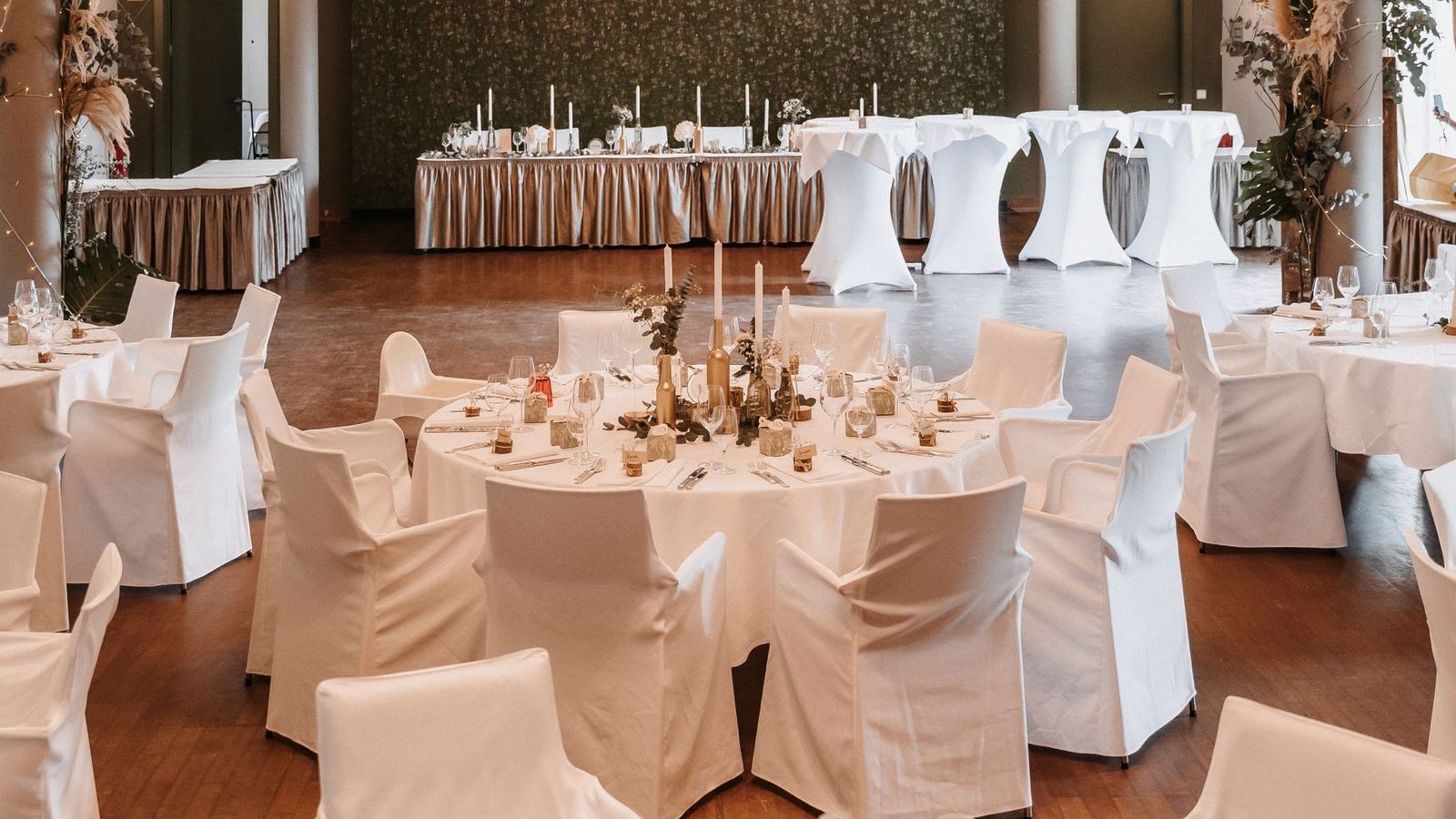
- The room at working scale. A ballroom photographed empty can look large or small depending on the lens. A video that moves through the room with tables set and people in it shows capacity honestly.
- The flow of an event. Arrival, ceremony or session, reception, dinner. A planner is mentally running their event through your space. Show the route their guests will take.
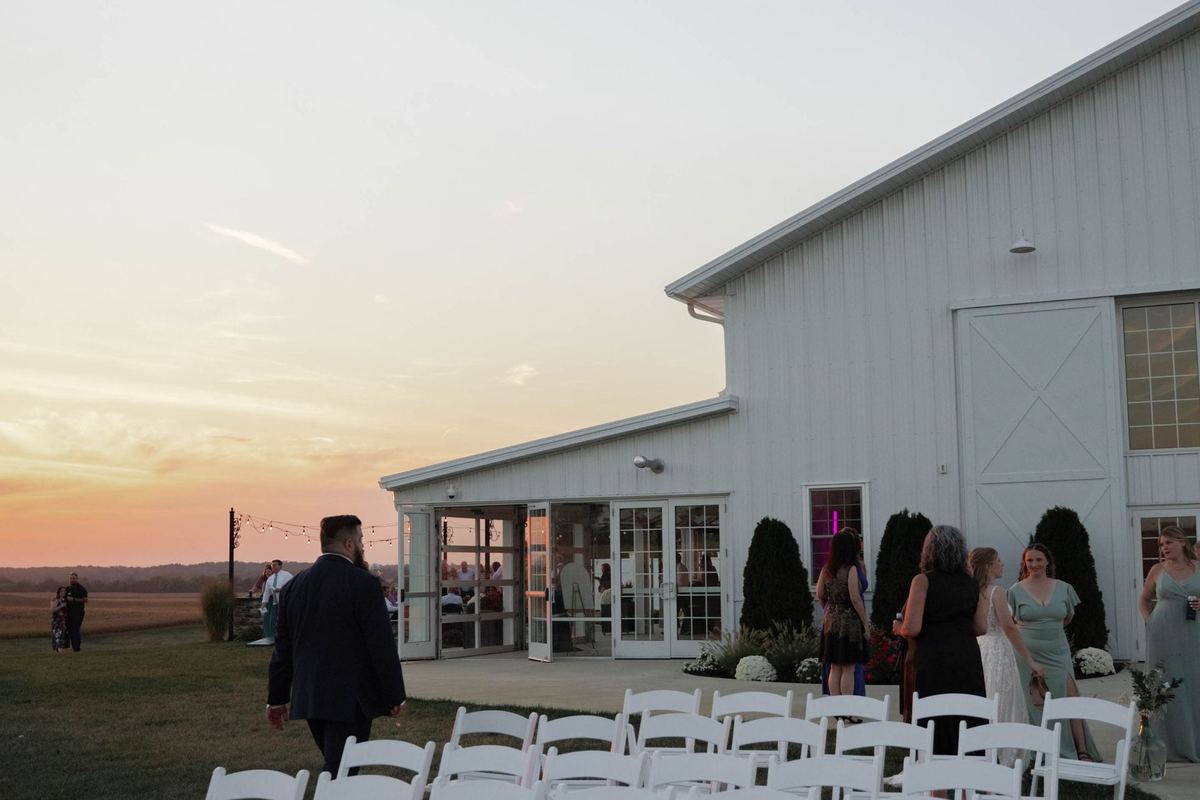
- Light at the hours events happen. Most venues are photographed at midday and booked for the evening. Film the space in late afternoon and after dark, when your events actually run.
- The practical routes. Load in access, kitchen and service movement, getting ready rooms, parking, and the walk from ceremony to reception. Buyers ask about all of it.
- Outdoor space in use. Gardens, terraces, and courtyards are often the deciding feature. Film them set, not empty.
Photos and Video Do Different Jobs
None of this replaces photography. Stills are what a buyer studies, saves, and sends to a partner or a committee. Our post on why hire a hotel photographer makes that case for hospitality properties, and it holds for venues. Video does the earlier work: it gives a buyer the feel of moving through the space, which is what creates the confidence to book a visit.
The two also get planned differently. Architectural stills need the room cleared and the light controlled, which is the discipline behind our commercial real estate and architectural photography work. A venue film needs the room dressed and alive. Booking both for the same setup day saves the cost of dressing the room twice, and the results sit together on your site and in your portfolio with one consistent look.
Film the Space Set, Not Empty
An empty room reads cold on camera, whatever its finishes. A venue film should show at least one full setup for each kind of event you want: a wedding layout, a gala layout, a conference layout. That takes coordination with your rental and catering partners, and it takes a setup day on the calendar, which is why venue films get postponed. It is also the whole difference between a video that answers questions and a video that raises them.
There is a second kind of venue film worth planning: coverage of a real event, with the client’s permission. A room full of guests, a band playing, a dinner being served, that is evidence no staged shoot can match. It belongs to the same family of work as our event Video Production for conferences and galas, and one well covered event can supply clips for a full season of inquiries.
Launches, Renovations, and New Spaces
A venue film matters most when the space is new or newly changed. A renovated ballroom still lives in buyers’ minds as the old room until they see the new one. The launch asset planning in our post on grand opening marketing for a new distribution center follows the same logic: film the opening, the first events, and the finished rooms as one planned set, not as leftovers. The walk through structure also borrows from facility filming generally, as our post on the distribution center video tour shows: enter as a guest would, move in the order a guest moves, and let the space explain itself.
One Film, Several Audiences
Keep in mind who else watches. A couple sends the film to parents who live out of state. A planner sends it to a client who will never fly in for a visit. A corporate organizer sends it to a manager who has to approve the spend. In each case the film is being used to settle a discussion you are not part of. That is why the venue film should be easy to share as a single link, why it should carry the room names and capacities on screen, and why it should never depend on a salesperson narrating over it. The space has to make its own case, in a forwarded email, on a phone, with the sound off.
The space has to make its own case, in a forwarded email, on a phone, with the sound off.
What a Venue Should Receive
- A main venue film, two to three minutes, for the website and inquiry replies.
- Short vertical cuts for social channels, one per key space.
- A planner version that includes capacities, setup options, and access routes.
- Still photographs from the same setup day, matched to the film.
Start a Conversation
Red Passage is a Georgia based visual communications studio in Newnan. Our hospitality work includes the Riviera Maya hotel photography project for Belmond Maroma. A permanent photographic installation by our founder stands at the Savannah Convention Center, documented on our Savannah Convention Center photography page. If your venue is losing first round decisions online, Start a Conversation and tell us which bookings you want the film to support.