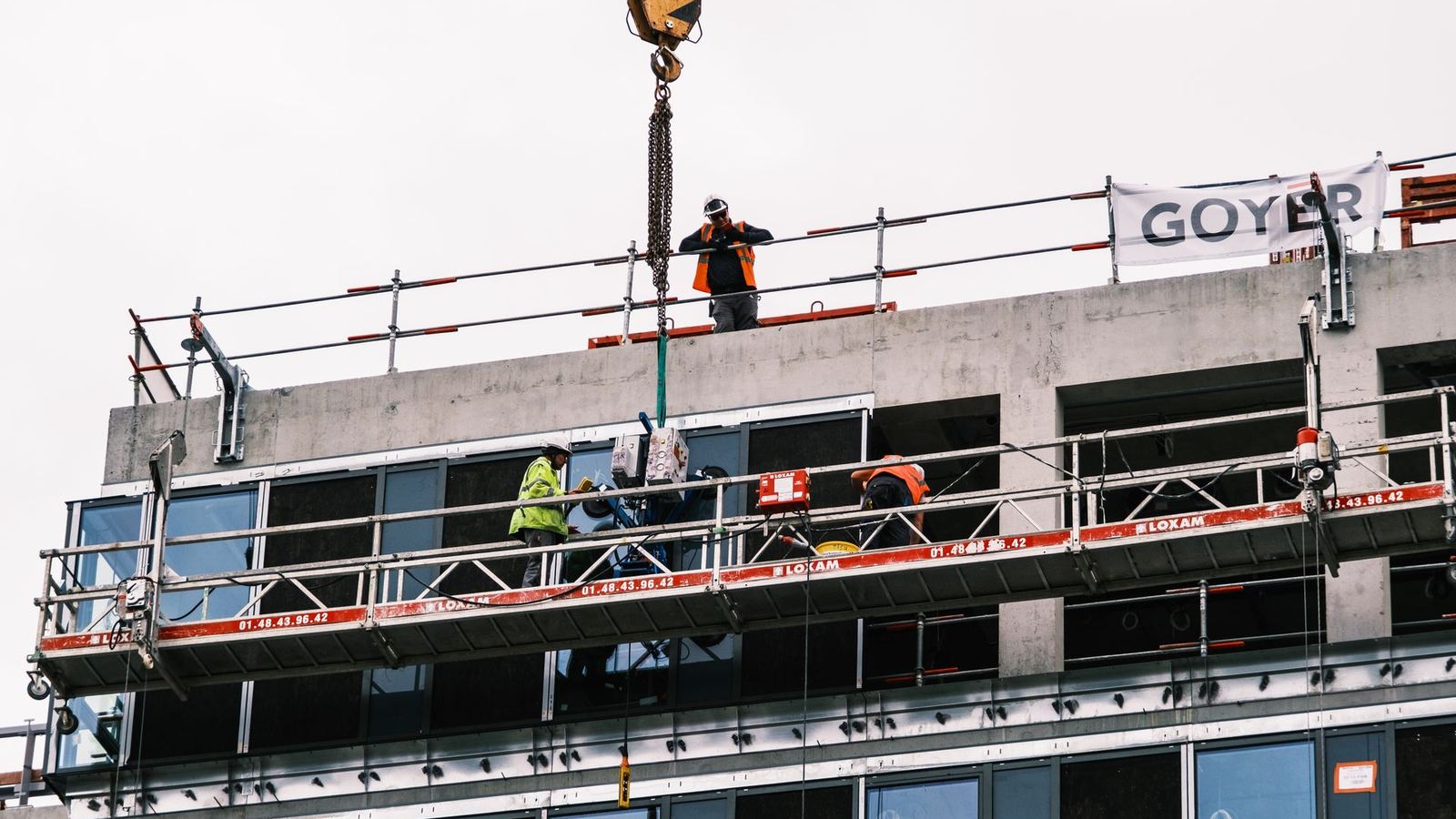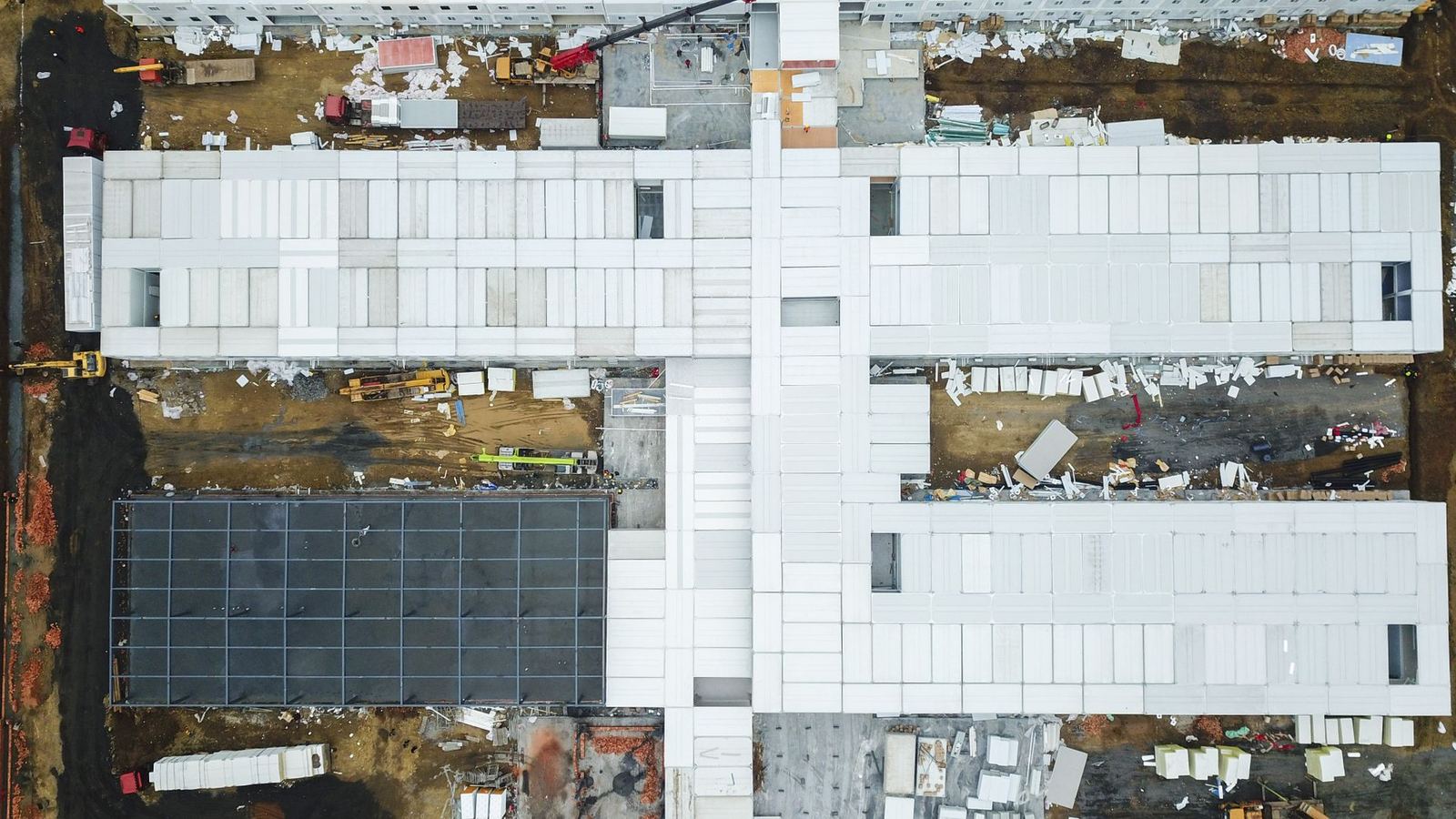
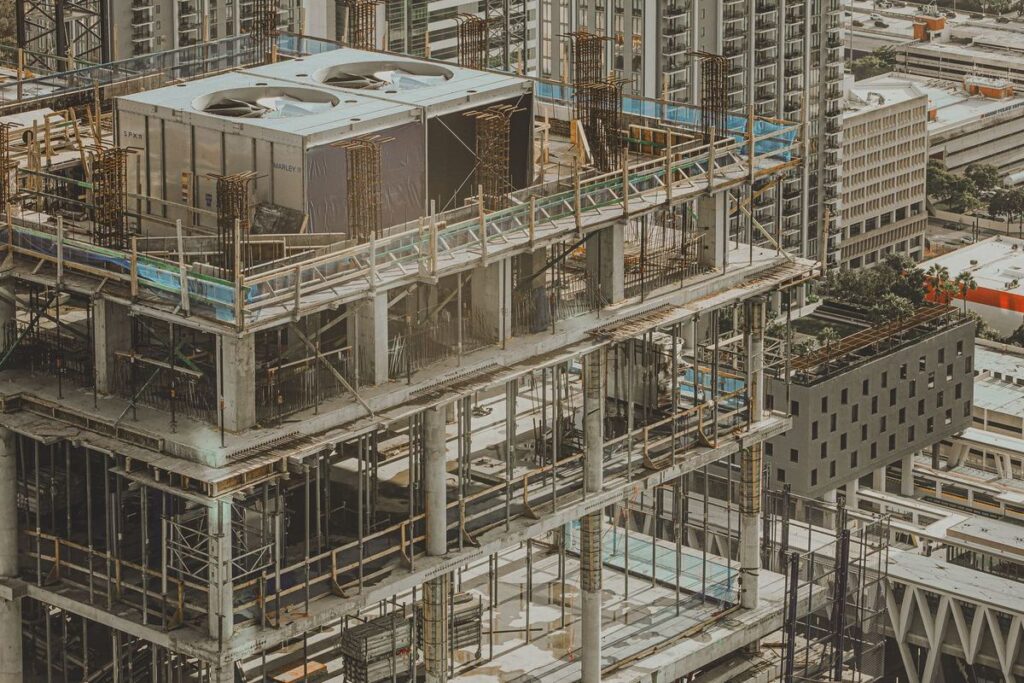
A ground-level photo of a construction site shows one wall, one slab, or one crew. It does not show the project. Owners, lenders, and partners reading a progress report want to see how the whole site is moving, and that view only exists from the air.
Drone video has become a standard part of construction reporting for a simple reason. A single flight can record the full footprint of the job, the state of each phase, and the site conditions around it. This guide covers how to use aerial footage in progress reports, how to keep repeat flights consistent, and the rules and safety questions to settle before anyone launches. Our construction video and photography page covers the full service.
One drone flight is a nice video. A series of flights, shot from the same positions at the same stages, is a reporting tool.
What Aerial Footage Adds to a Progress Report
Still photos from the ground remain useful. They document details, finishes, and close work. Our warehouse photo documentation checklist covers that ground-level discipline, and it applies on a job site too. Aerial video answers a different set of questions:
- How far has each phase advanced since the last report?
- How do the finished and unfinished sections sit next to each other?
- What is the state of access roads, staging areas, and stored materials?
- How does the project sit in relation to the road, the neighbors, and the land around it?
For a reader who cannot visit the site, that context is the report. A two-minute aerial pass, flown the same way each month, tells a lender or an out-of-state owner more than a folder of disconnected photographs.
Consistency Is What Makes It a Report
One drone flight is a nice video. A series of flights, shot from the same positions at the same stages, is a reporting tool. Plan the flight paths at the start of the project and repeat them. Same altitude, same angles on the main building faces, same orbit of the full site. When the March flight and the May flight line up, anyone can see exactly what changed.
Date and log each flight. Note the weather, the time of day, and the phase of work on site. Keep the unedited footage as well as the finished cut. Owners and general contractors often need a specific moment pulled later, and the raw file from that date is the record. This is part of the wider question of what you should actually receive from a production, which we covered in our post on video deliverables for construction companies.
The Rules Come First: Part 107 and Site Safety
Commercial drone work in the United States falls under the FAA Part 107 rules. As a buyer, you do not need to hold the certificate yourself, but you should ask any operator these questions before a flight:
- Is the remote pilot Part 107 certified, as commercial work requires?
- Is the airspace over the site clear to fly, or is an authorization needed first? Many sites sit near airports or other controlled airspace where approval has to be obtained in advance.
- What are the site safety rules for the day? A drone does not fly over active crews, and the flight plan has to account for cranes, lifts, and material moves.
- What weather stops a flight? Wind and rain are not judgment calls to make with a schedule pressing.
- Who on the ground knows the flight is happening, and who can call it off?
Treat an operator who waves off these questions as a problem, not a convenience. Our earlier post on drone photography for warehouses covers the same rule set for logistics sites, and the standard is identical: the paperwork and the safety plan come before the flight.
Ground and Air Belong in the Same Report
The strongest progress package pairs the aerial pass with ground coverage. The drone shows the footprint and the phase. Ground cameras show the quality of the work inside it. Interior progress, system installs, and finishes read clearly at eye level, and a facility video tour style walk gives owners a sense of the finished space long before handover.
That combination also serves the end of the project. The same aerial positions flown at completion become marketing material for the finished building, which is where commercial real estate and architectural photography takes over, and the final flight can anchor a completion film or an event Video Production piece for the opening. On large industrial builds, the progress record also feeds the owner-facing material covered on our industrial and manufacturing Video Production page.
What You Should Receive After Each Flight
- An edited progress video for that period, labeled with the date.
- Aerial still photographs from the standard positions.
- The raw footage, stored and labeled by date.
- A short flight log: date, time, weather, and phases recorded.
Start a Conversation
Red Passage is a Georgia visual communications studio based in Newnan. We produce Video Production and commercial photography for organizations with real operations to show, and our portfolio shows the range of that work. If your project needs a consistent aerial record from groundbreaking to completion, Start a Conversation and tell us the site, the schedule, and who reads the reports.