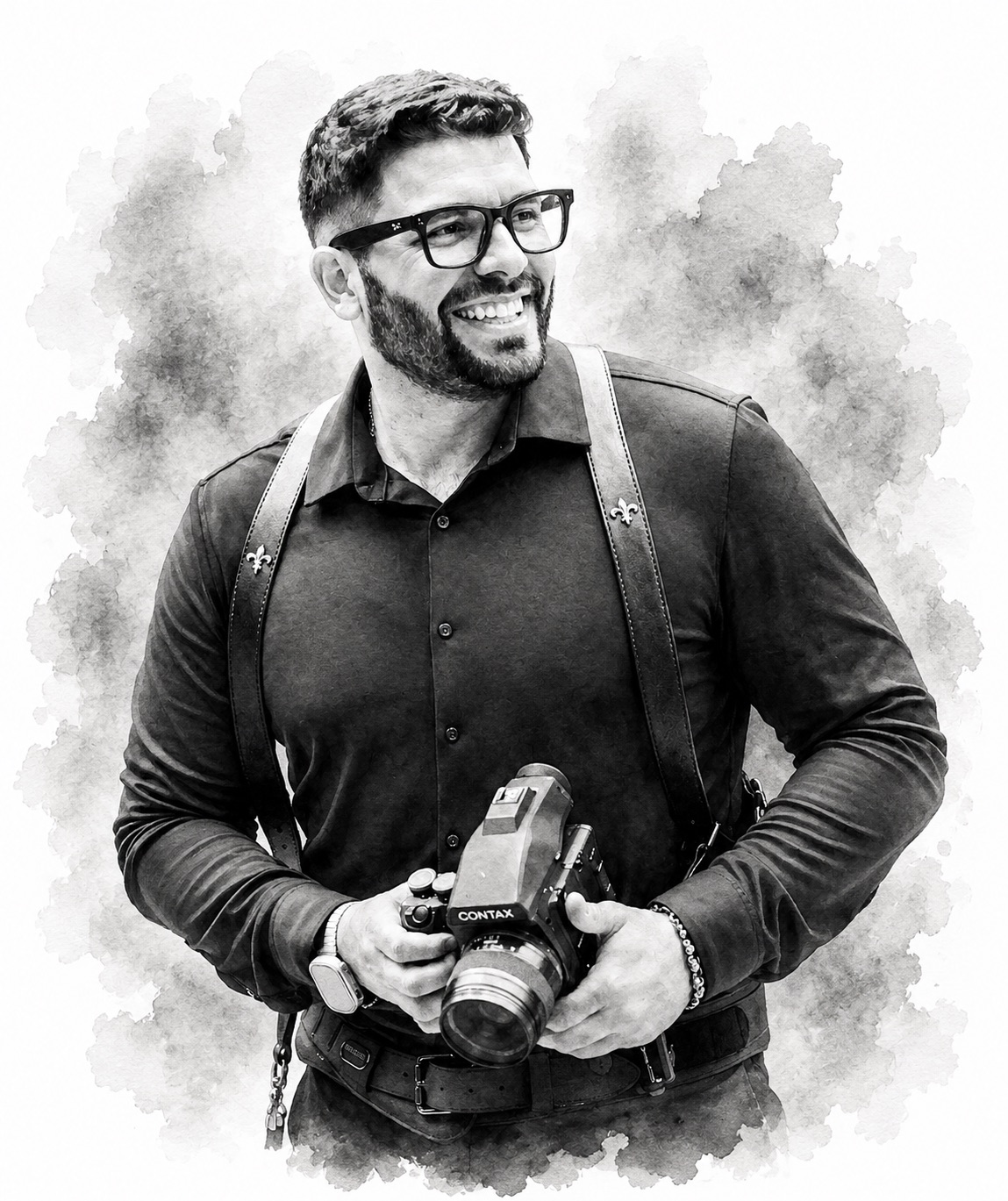
Every project at Red Passage Visual Communications begins with the same question: what should people feel when they see this? That instinct was not learned in a boardroom. It was trained over 14 years and more than 450 weddings, camera in hand, at celebrations where there are no second takes.
I’m Vitor Lindo, founder and creative director of Red Passage. Long before commercial clients trusted me with their facilities, their teams, and their brands, couples trusted me with the most important day of their lives through my wedding photography and filmmaking studio, Vitor Lindo. Clients ask about that backgroun
d often, so here is the honest version of how one career shaped the other, and why it matters for the commercial work we deliver today.
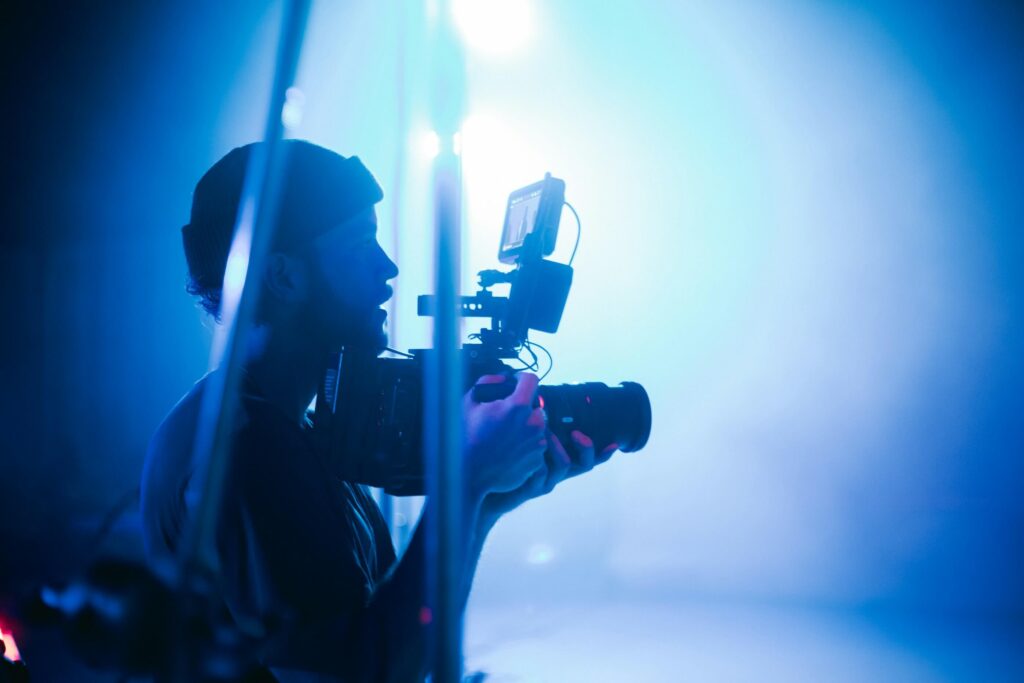
450 weddings. Zero second takes.
A wedding day is the ultimate pressure test for a visual storyteller. The timeline is unforgiving, the emotions are real, and nothing can be reshot. You learn to read a room in seconds, anticipate a moment before it happens, and stay calm while everything moves fast around you.
A typical wedding day runs up to fourteen hours, from getting ready through the last dance, across multiple locations, with family dynamics, weather changes, and a schedule that starts slipping the moment someone runs late. You do not get to call cut and reset. You adapt quietly and fast, and nobody in the room should ever feel the adjustment happening. That composure is exactly what a commercial set needs when a CEO’s availability shrinks from an hour to twenty minutes, or when a facility tour has to wrap before the shift change.
You also learn to direct people who have never been on camera. Most couples are not models, and neither are most executives, engineers, or plant managers. A nervous groom and a nervous plant manager need the same thing: clear direction, genuine encouragement, and a photographer who makes the whole thing feel easy. That skill transfers directly into our recruiting videos, where the goal is to present employees as the capable professionals they are, not as actors reading lines.
Then there is the logistics training nobody talks about: organizing forty family members for formal portraits in twelve minutes, outdoors, in fading light, while the cocktail hour waits. Anyone who can do that can walk into a manufacturing facility and photograph an executive team efficiently. Commercial clients feel it when a crew respects their people’s time instead of burning an entire afternoon for three usable images.
The storytelling discipline carries over too. A wedding delivers thousands of frames that must be distilled into a coherent narrative, which trains an editor’s eye for what matters and what can be cut. Commercial editing benefits from the same instinct: finding the thread, removing everything that does not serve it, and delivering a final piece with a clear beginning, middle, and end.
You can see the wedding work behind all of this in our wedding portfolio.
Multi-day productions across cultures
Many of the weddings I document span several days, venues, and cultures. Indian wedding photography in particular demands large-scale production thinking: the Sangeet, Baraat, and ceremony unfold across days, with hundreds of guests, intricate timelines, and rituals that cannot be paused or repeated. Low light during an evening ceremony, fast lens changes during a Baraat procession, second shooters coordinated across multiple events: it is complex production work, and it has to stay invisible to the people experiencing it.
Weddings also teach you to collaborate. A luxury wedding involves planners, coordinators, florists, bands, and venues, all working from the same timeline. That is not so different from a commercial production with marketing directors, project managers, and facility contacts. You learn to communicate clearly, share the plan, and make every partner look good, because the final result belongs to everyone.
That cross-cultural fluency followed me into commercial work. I spent three years living in Brazil, and Red Passage fields bilingual video production crews working across Portuguese and Spanish. We have produced recruiting films in Brazil for companies including Dell and Scania, assignments where understanding the culture mattered as much as operating the camera. When a production spans languages and expectations, the crew that listens best usually films best.
This is also why our commercial work travels well. A team that has documented celebrations across the United States, Latin America, and beyond does not get rattled by an unfamiliar facility, a last-minute location change, or a schedule rewritten on the morning of the shoot.
Speed is a discipline, not an accident
Commercial clients are often surprised by how fast we deliver. When a facility needs video in 24 hours, we do not panic. A wedding day taught us long ago that the moment does not wait for the crew to be ready.
Wedding clients expect sneak peeks within days, sometimes the next morning, while the excitement is still fresh. That trained a workflow built for turnaround: disciplined shooting ratios, organized media management, redundant backup systems, and editing processes that move fast without cutting corners. A wedding shooter carries backup bodies, dual card slots, and a plan for failed gear, because there is no rescheduling a wedding. We bring that same redundancy mindset to every commercial shoot.
Speed, done right, is preparation plus decisiveness, not rushing. And the same discipline applies before the shoot: we scout locations, build shot lists, and confirm details in advance. The wedding equivalent is the timeline meeting weeks before the day, walking through every hour so there are no surprises. Clients feel the difference when a crew arrives already knowing what the day requires.
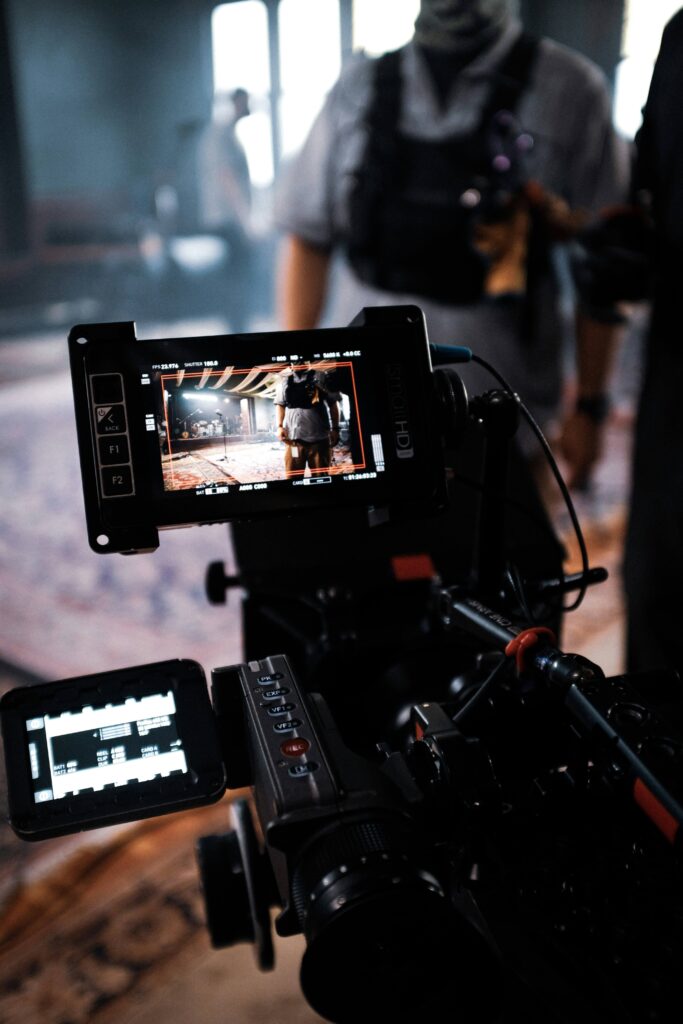
What this means for commercial clients
That background now serves organizations across Georgia and beyond through our corporate and B2B Video Production work: facility showcases, brand films, recruitment campaigns, and executive storytelling.
The wedding-trained eye shows up clearly in hospitality and venue work. We were commissioned to create a permanent photographic installation for the Savannah Convention Center: seventeen large-format images now welcoming visitors from around the world. Photographing a venue so it feels alive uses the same instincts as photographing a wedding reception, which is light, atmosphere, and the details people actually remember.
And because we have delivered hundreds of high-stakes projects, we are precise about what commercial clients actually receive: defined deliverables, clear timelines, and assets built for real-world use, from boardroom presentations to trade show displays. Consistency matters here too. A wedding client receives a gallery where every image meets the same standard, and we hold commercial deliverables to that same bar, whether it is a ninety-second brand film or a library of facility photographs.
Two studios, one standard
The wedding studio operates as its own brand with its own team and process. Couples can explore our wedding photography and film collections or get in touch with the wedding studio directly.
I keep the brands separate because the clients, timelines, and deliverables are genuinely different. But the standard is identical: deep preparation before the shoot, calm execution during it, and imagery built to hold up for years. I write about the commercial side of the craft here on the Red Passage blog.
If you are evaluating a commercial photography and video partner, start a conversation with our studio, or learn more about the studio behind the work.